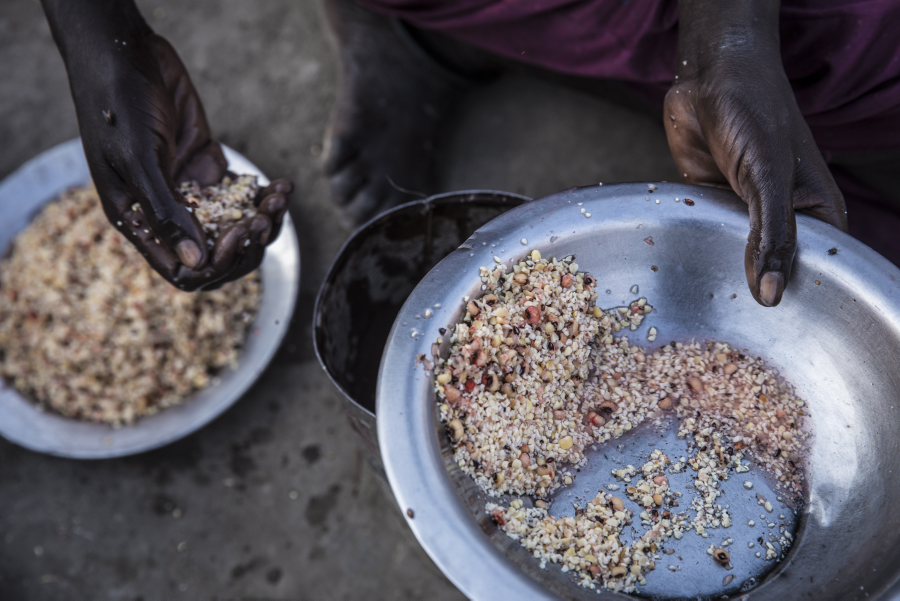
Food insecurity is likely to worsen significantly through May 2022 in Somalia, with many households experiencing widening food consumption gaps and erosion of their coping capacity, the United Nations relief agency warned on Sunday.
Citing Somalia 2021 Post Gu Seasonal Food Security and Nutrition Assessment (FAO/FSNAU), the UN Office for the Coordination of Humanitarian Affairs (UNOCHA) said an estimated 3.5 million people will face acute food insecurity through December, of whom nearly 640,730 will face an emergency.
“The delay of the October-December deyr (short) rains has also significantly affected supplementary food and income from livestock production,” UNOCHA said in its latest humanitarian bulletin released on Sunday.
It said food insecurity and acute humanitarian needs have been reported across all sectors, with more than 5.9 million people currently in need of humanitarian assistance and protection.
According to OCHA, humanitarian agencies project that 7.7 million people in Somalia will need humanitarian assistance and protection in 2022 due to conflict in various parts of the country, recurrent climatic shocks particularly drought and floods, disease outbreaks, including COVID-19 and increasing poverty.
The widespread dry conditions have resulted in increased human suffering and livestock deaths, with severe drought impacts reported in Jubaland, Southwest and Galmudug states (central regions) and parts of Puntland.
“In addition to the more than 2.9 million IDPs in Somalia, at least 5.5 million people are reportedly vulnerable due to pre-existing shocks and recurring disasters and are among those who are likely to need humanitarian assistance and protection in 2022,” it said.
According to UNOCHA, 71 percent of Somalis will continue to live below the poverty line in 2022, especially in areas where humanitarian access remains a challenge. RSS